Wednesday, June 16, 2010

Reflection

Ever since the first blog post up until now, I have learned many things that would benefit myself and my general knowledge. How much blogs have become a part of not only our casual lifestyle but also in education. As blogs are now a medium of expressing ourselves in terms of freedom of speech and to connect one person to another with just something as easy as creating a link and clicking a button. Blogging has also created a new village known as a global village whereby we are all linked through the internet with out blogs and information can be accessed almost anywhere at anytime. Also with the many different types of blogs present, we are now able to select a specific type of information to read from.


(Source: Perceptivity)

Also with the coming of being able to send a message to anyone of our friends regardless the number for free (Johnson S, 2009) to alert them of my current whereabouts and so on. That technology is known as Twitter. With Twitter being absorbed by corporate companies and celebrities, it is growingly addictive due to its ability to post a message almost instantly for free.


(Source: Wordpress)

I have also learned how much information we can obtain through the ever popular video posting site, Youtube. Also, a place that has over 170 million active users (Caldwell J, 2009) where we can stay connected to our friends and family no matter the distance, Facebook. These two phenomenon's have millions of users and have influenced our daily lives in unimaginable ways providing us with entertainment and news as well as the ability to connect with each other. Facebook not only connects political groups but also creates a social feeling (Caldwell J, 2009).


(Source: www.umn.edu)


(Source: Klia Ekspres)

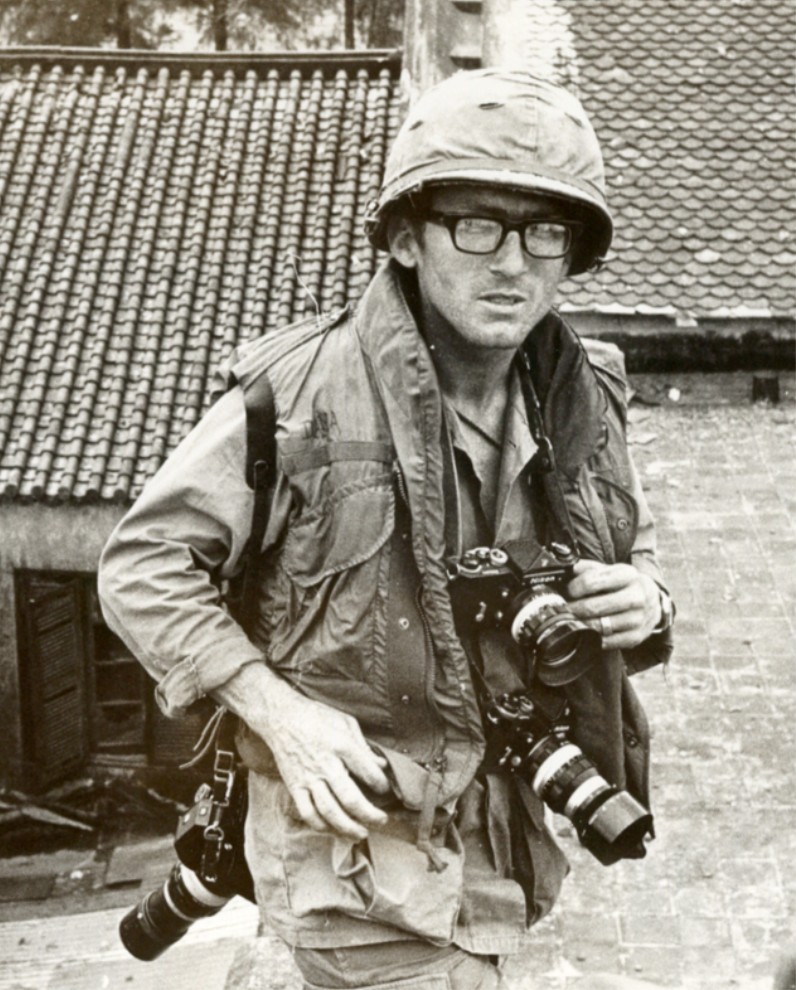
The extent of photography and how it has helped create awareness to other people about war and other things have indeed been a realization to myself. Never has one known that pictures could do that to a person. At first thoughts, pictures were only memories kept in a material form but now, pictures are not only memories but stories told through photographs.


It has been an enlightening experience to me to learn about all these of which I have never known before. So much detail and lessons I have learned through this blog posts. Lessons that I would never find out without this subject.

References
  • Caldwell J, 2009, The Influence of Facebook in Society, online, viewed on June 16th 2010, available at http://www.west-branch.k12.ia.us/Schools/wbhigh/The%20Bear/new/Issues/2-26/Opinion%20page%203.pdf
  • Johnson S, 2009, How Twitter Will Change The Way We Live, online, viewed on June 16th 2010, available at http://www.time.com/time/business/article/0,8599,1902604,00.html

Tuesday, June 15, 2010

Issue 11: Visuals, meanings, cultural/situational context & photojournalism issues

The Power of the Photograph

Pictures do speak louder than words and pictures are worth a thousand words. Especially in terms of war pictures that show how much mankind is capable of hatred and killing. The recent war that broke out in Dubrovnik has indeed left a permanent scar to those who have lived through those days of war and crisis and also to those who are currently living there.


(Source: News Week)


A gallery showcasing war photographs was opened in Dubrovnik to remind people of the cruelty and reality of war. How much people have suffered from wars, how much families are longing for their lost ones and how much history and effect it has had on the people around.


Still pictures provide a more in depth feeling to viewers especially those who visit the gallery in Dubrovnik. Instead of watching a few seconds of video from news channels (Funnell A, 2007), these photos have a longer lasting effect that show the sufferings of war.

Gallery owner Frederic Hanrez gathered many photographers from around the world that capture these war photos to present them to the gallery to be viewed by visitors and tourists. Many of the tourists and visitors to the gallery left with a deep impact to their hearts as they realized how much war can do to a country and to people. It also makes people realize how much war should be prevented and not engaged.


(Source: Pythia Press)

It is impossible to know war if one does not stand with the powerless caught in its maw (Hedges C, 2009). But through these pictures, we can connect with the captured images of hurtful eyes and painful tears.

This gallery is also to help visitors realize the though we go on with our day to day duties, there are people out there that are still suffering the same fate as those in the photographs. It teaches us to respect and care as however we can about how we live our lives and think about those less fortunate than ourselves as it is gallery owner Frederic Hanrez's main purpose. Realization.

References
  • Funnell A, 2007, The Power of the Photograph, online, viewed on June 16th 2010, available at http://www.abc.net.au/rn/mediareport/stories/2007/2051819.htm
  • Hedges C, 2009, What War Looks Like, online, viewed on June 16th 2010, available at http://www.nytimes.com/2009/05/24/books/review/Hedges-t.html?_r=1&ref=war_photography

Issue 10: Blogging & freedom of speech/ citizen-j/ internet censorship issues -ethical publishing/communication issues

The Blogging Revolution

An interview with Antony Loewenstein who is a journalist and an author of the book called The Blogging Revolution has proved to be very informative. With Antony Funnell being the interviewer, many questions were asked wit accordance to Antony Loewenstein's new book. He had traveled to six countries which were Iran, Cuba, China, Egypt, Saudi Arabia and Syria to find out how much of the internet was used and whether freedom of speech was being practiced in those countries (Funnell A, 2008).

Though the blogging age has indeed come and risen from nothing with vast speed, there are countries that are not able to practice this new form of freedom of speech. A country in particular is Cuba where the usage of internet is closely monitored and controlled by the government. This is because the government has realized what a threat to the country the internet is with bloggers that go against local political parties. A report done in 2001 shows that there are only 40,000 people online in Cuba which is a very small percentage because the total estimated population in Cuba is well over 11,000,000 (www.cubadomainsforsale.com).

Though the majority in China are still not in terms with blogging and the internet, it has shown a steady increase of users every time as people now realize the importance of freedom of speech. With blogs as the only place one can voice out their opinions, it has caught the attention of other countries that Antony Loewenstein has visited for his book.

In the other countries he has visited as well, it has shown an increase of internet users and bloggers but there are still some countries which keep to their roots. Iran in particular is still wanting to keep to the Islamism way but the internet and blogging age is catching on quickly within the country.

Though we may think that companies like Google, Yahoo and Microsoft are only information mediums to us, (Funnell A, 2008) but in China, these companies are helping them improve their security firms and block out internet webpages. But in reality, no matter how much they try to stop it, more and more will come (Funnell A, 2008). This is because of the freedom of speech that comes with blogging and the ability to access an infinite amount of information just by clicking a few words.

In other words, the internet is an inevitable form of technology that no country can permanently stop or block out. With its ability to provide information of any kind to its users and with blogging as a form of freedom of speech, soon, the internet will eventually catch on.


(Source: Olive Centre)

References
  • n.a, n.d, Facts About Cuba and The Internet, online, viewed on June 16th 2010, available at http://www.cubadomainsforsale.com/cuba-facts.html
  • Funnell A, 2008, The Blogging Revolution, online, viewed on June 16th 2010, available at http://www.abc.net.au/rn/mediareport/stories/2008/2351985.htm

Section I: Article D

How Celebrity Imposters Hurt Twitter's Credibility

The article talks about how imposters have come to flood Twitter accounts with many of them posing as celebrities. In particular, one case happened to relate to the Dalai Lama (Owens S, 2009). It was said that the Dalai lama had actually create a Twitter account and entered the Twitter world. But it was later found out a few days later that the Twitter account created by the Dalai Lama was actually created by an impersonator. An impersonator is someone who pretends to be someone else with aims to deceive (Jan C, 2009). Twitter only allows users to create parodies and fan accounts but not to impersonate someone else as it violates their policy (Jan C, 2009).


(Source: Hollywood Today)

Celebrities like Shaquille O'Neal and big businessmen like Steve Jobs have also fallen to impersonators. Shaquille O'neal actually countered that account by creating his own account in order to diffuse the impersonator and clear the air. He eventually called one of his followers in order to prove that he was the real deal and not another impersonator (Owens S, 2009).


Due to the lack of staff present in Twitter, it is relatively impossible to keep track with the thousands of new applicants and most of the time they result to waiting for complaints that their account has been hacked or someone has been impersonated (Owens S, 2009). Twitter however encourages celebrities to come out and create accounts with Twitter in order to prove they're the real deal to fans and followers.

Journalists have also been fooled by impersonators especially in terms of the case with the Dalai Lama as many journalists have prepared their research of this topic and were ready to be presented to their editors only to find out a few days later that the Dalai Lama Twitter account created was fake (Owen S, 2009).

On another account, a student of Lake Washington High School was impersonated by someone from a rival high school. It was stated that the impersonator made racial comments to other Twitter users with the name of the student from Lake Washington High School. He is now suing the impersonator and is asking Twitter to release information about this impersonator in order to get to the bottom of the problem (Managan M, 2010).

Impersonations have indeed caused chaos and unhappy feelings with normal people all the way to celebrities and big names. It could also cause a persons name to be defamed and with celebrities, it may cost them more than a name but also their fan base and avid followers.

References
  • Owens S, 2009, How Celebrity Imposters Hurt Twitters Credibility, online, viewed on June 16th 2010, available at http://www.pbs.org/mediashift/2009/02/how-celebrity-imposters-hurt-twitters-credibility051.html
  • Managan M, 2010, Racism and Twitter impersonations prompt lawsuit for Kirkland teen, online, viewed on June 16th 2010, available at http://www.seattlepi.com/sound/417973_sound89792712.html
  • Jan C, 2009, Impersonation Policy, online, viewed on June 16th 2010, available at http://help.twitter.com/entries/18366-impersonation-policy

Section I: Article C

Blogging is so yesterday, politicians turn to Twitter

The article here talks about how people, in this case politicians and important people have turned to Twitter as an alternative for new media and posting quick information and news instead of using a blog which is time consuming. People like Datuk Seri Anwar Ibrahim and our own Prime Minister Datuk Seri Najib Razak has turned to Twitter as an alternative source of political news and current happenings (Zahiid S, 2010).


The article also states that this is due to its mobility and speed of posting up information (Zahiid S, 2010). The effect of being able to post live, quick and fast information at the tip of your fingers are greatly valued in this age of vast information. Followers of blogs are usually those of avid readers and pure fans of the blog (Zahiid S, 2010) but with Twitter, followers are able to obtain live updates just as soon as the posts are updated by the poster, which is almost instantly.

Studies have also shown that the number of 3G users which was 3 million in 1999 has drastically increased to 28.9 million in 2009 (Zahiid S, 2010). This is due to the applications like Twitter and Facebook that enable quick posting which has become increasingly more popular with people of all ages and status. Twitter is also something that possesses something televisions, radio stations and newspapers are not able to do. It is designed for quick posting and quick information unlike the old school media.

Companies big and small are now also turning to Twitter to updating their followers with the latest news (Fleet D, 2002). Many people say that blogging takes an more time than Twitting and that is not entirely true. Blogging provides readers and followers with proper details and depth information so this causes blogging to take up a great deal of time compared to Twitter. But Twitting provides only a certain view of the information and it is not in full. In order to achieve depth in information posted, posters will have to also take quite an amount of time in order to organize their words in a manner where their posts will be able to provide as much information possible (Fleet D, 2002) as Twitter limits the amount of words available for posting unlike blogs.


Hardcore tweeter Jonson Chong also says that these two phenomenon's are present and catered for two different types of crowds (Zahiid S, 2010). People who are interested in posting quick live information and those who are contented to provide in depth information.

Jonson Chong also stated that Twitter is there also to promote blogs (Zahiid S, 2010). Twitter as a medium for quick information that leads to blogs that provide full information.


(Source: Blogspot)

References
  • Fleet D, 2002, Blogging vs. Twitter: A Different Kind of Commitment, online, viewed on 16th June 2010, available at http://davefleet.com/2009/02/blogs-vs-twitter-different-commitment/
  • Zahiid S, 2010, Blogging is so yesterday, politicians turn to Twitter, The Malaysian Insider